How To Design A Multi-Functional Bedroom That’s Both Stylish And Practical
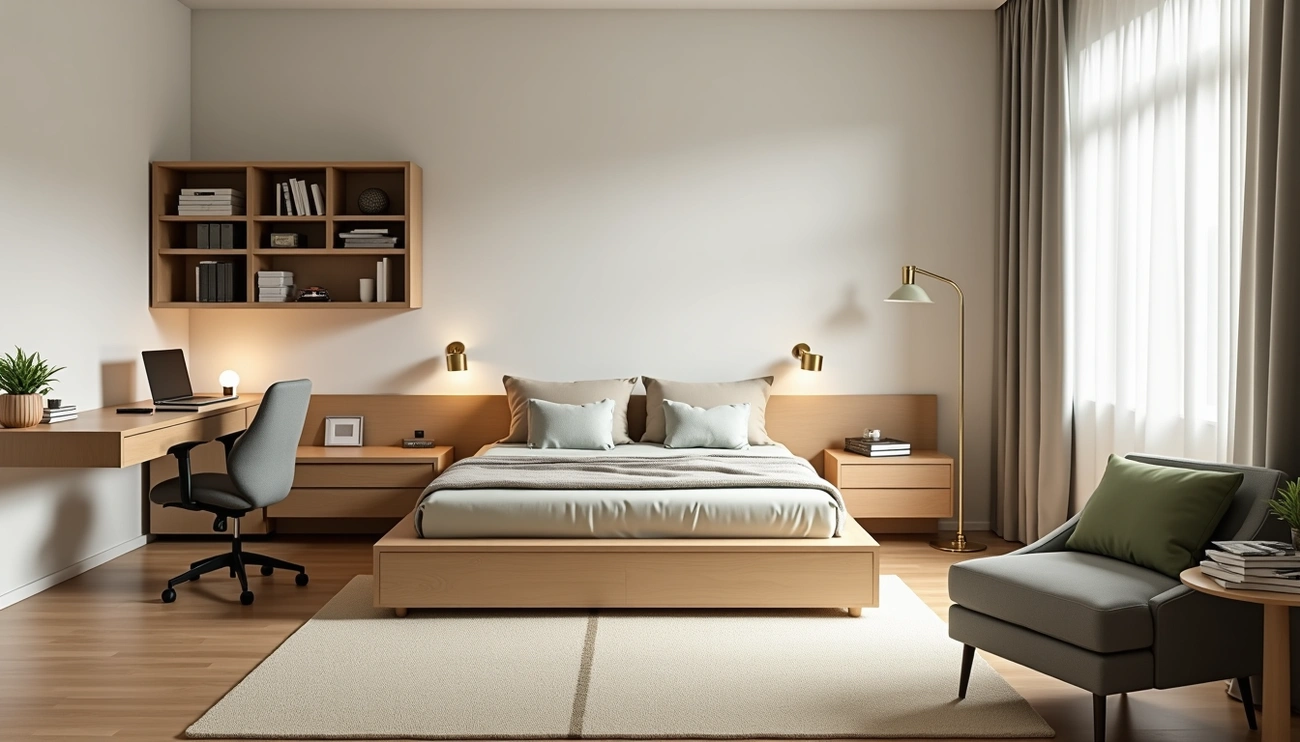
Your bedroom used to be just for sleeping. Not anymore. Today’s living space demands every room work harder, and your bedroom is no exception.
With space at a premium, you need a bedroom that juggles sleeping, working, and relaxing without feeling like a chaotic mess.
So how do you create a space that does it all whilst still looking stylish?
The answer lies in smart multi-functional bedroom design. Whether you’re after clever multi functional bedroom ideas or hunting for space-saving multi-functional bedroom furniture, the secret is knowing how to zone your space effectively.
This guide will show you exactly how to create distinct areas, choose the right transforming multi functional furniture for small bedroom layouts, and balance practicality with style. Ready to make your bedroom work beautifully for everything you need?
Let’s get started.
Understanding Multi-Functional Bedroom Design
What Makes a Bedroom Multi-Functional
What exactly turns an ordinary bedroom into a multi-functional powerhouse? It’s all about making your space work harder for you. Instead of just sleeping, your bedroom can handle working, relaxing, and even socialising within the same four walls.
The magic lies in flexibility. Your space adapts to whatever you need, whenever you need it.
Remote work has changed everything. More people are hunting for extra bedrooms that double as home offices, creating those quiet, dedicated workspaces we all crave. And it makes sense – having a proper office space genuinely helps you get more done during the day.
That spare corner or window area? Perfect for a desk where you can work, study, or tackle personal projects without disrupting the rest of your bedroom.
Guest rooms tell a similar story. Fitted wardrobes and sofa beds mean you get double the function from the same space – a proper dressing room when you need it, plus a comfortable guest bed when friends visit.
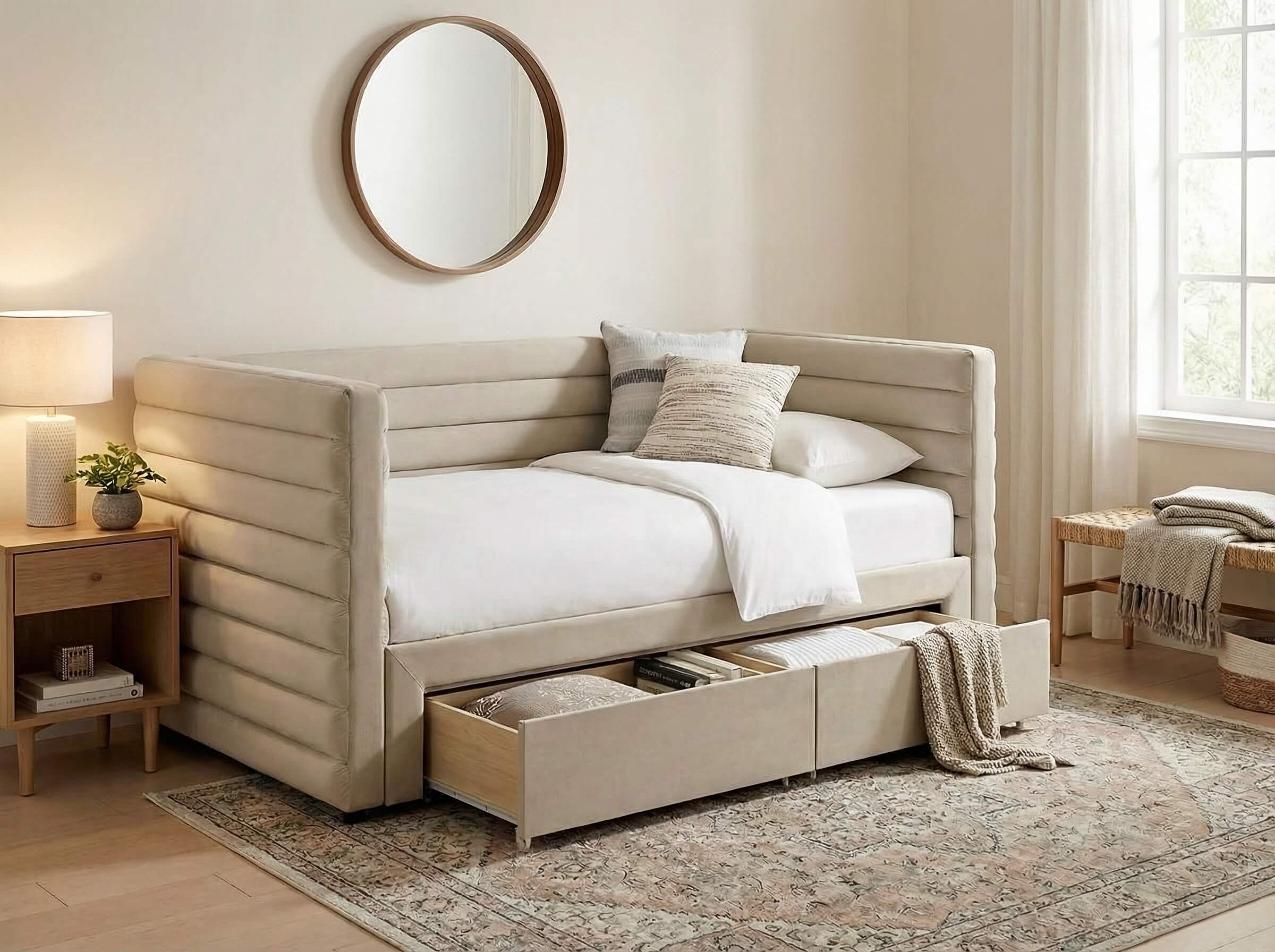
Pictured: Bellatrix day bed with drawers – Taupe. Priced £379, available from Bedstar online.
This approach works brilliantly when you can’t quite commit to just one purpose for your room.
Key Benefits of Multi-Functional Spaces
Why should you bother with multi-functional design? The benefits speak for themselves.
Everything gets its own place, which means no more tripping over random bits or hunting for lost items. You’ll be amazed how much calmer your space feels when clutter disappears.
Your space grows with you, too. Family expanding? Interests changing? Your multi-functional bedroom adapts right alongside your evolving lifestyle.
Plus, using one space for multiple purposes means less furniture and fewer rooms to fill – your wallet and the environment will thank you.
Here’s something interesting: a well-organised multi-functional space actually boosts your focus and efficiency. Switching between different activities becomes smoother, which increases your overall productivity.
Research shows that 26% of people globally say doing hobbies or personal projects at home is crucial for their mental wellbeing.
Assessing Your Bedroom’s Potential
Before you move a single piece of furniture, take a moment to think about what you actually need. Will your bedroom be for sleeping, working, relaxing, or socialising? Maybe all of the above?
Start with your non-negotiables.
Do you absolutely need desk space for work?
Loads of storage for your belongings?
Plenty of natural light to keep the room bright and airy?
Think about your daily routine and lifestyle too. Are you constantly busy, or do you prefer a more relaxed pace? Do you love entertaining guests, or is this your private retreat?
Don’t forget about your personal style preferences either. Your colour schemes, furniture choices, and decorative touches matter just as much. After all, your bedroom should reflect who you are and make you feel completely at home.
Planning Your Multi-Functional Bedroom Layout
What functions will your bedroom serve?
Don’t move a single piece of furniture until you’ve got a clear picture of what your bedroom needs to do. Make a list of everything you want to happen in this space – sleeping, working, getting dressed, reading, or entertaining guests.
Your bedroom might need to be a peaceful sleep sanctuary by night and an energising workspace by day.
Think about timing, too. Natural morning light works perfectly for dressing areas, whilst softer evening lighting suits winding down. Once you’ve nailed down your vision, every other decision becomes much clearer.
Creating distinct zones without walls
You don’t need to knock down walls to create separate areas in your bedroom. Folding screens work brilliantly for sectioning off dressing areas or creating privacy between your bed and sitting area.
Area rugs are your secret weapon here – they anchor furniture groupings and visually define different zones.
Pop a large rug under your bed for the sleeping area, then use a smaller one under a chair or desk to mark out your work zone.
Smart furniture placement does the heavy lifting. A sofa positioned at the foot of your bed instantly signals a shift from sleep space to relaxation area. Curtains give you flexibility – draw them closed for privacy or sweep them back to open up the room.
Built-in wardrobes behind your bed double as room dividers whilst maximising storage.
Measuring and mapping your space
Get your measuring tape out and map your room properly. Note down wall lengths, ceiling height, and the exact dimensions of windows and doors, including their frames.
Measure your ceiling height at several points – you might be surprised by variations. Don’t forget to record where radiators, plug sockets, and light switches sit.
Here’s a clever trick: use masking tape on the floor to mark out where furniture will go. This lets you walk around and test the layout before you commit to anything.
Getting the traffic flow right
Nobody wants to squeeze past furniture every time they enter their bedroom. Keep at least 60cm clear from doorways to any furniture. Between chairs and sofas, allow 45-60cm for comfortable movement. Around tables, you’ll need 90cm to walk comfortably.
For your bed, leave a minimum of 60cm on both sides so you can get in and out easily. Wardrobe doors need 90cm of clearance in front – enough space for someone to walk behind you whilst you’re rummaging through your clothes.
Choosing Multi-Functional Bedroom Furniture
The right furniture makes or breaks your multi-functional bedroom. Each piece needs to work overtime, serving multiple purposes without compromising on style or comfort.
Beds with Built-In Storage Solutions
Storage beds turn that wasted space underneath your mattress into a goldmine of storage. Ottoman beds are particularly clever – they feature hydraulic mechanisms that lift your entire mattress upwards, revealing a massive storage compartment beneath.
You’ll get significantly more storage space than drawer alternatives because you can use the whole area underneath your mattress.
For awkwardly shaped rooms, ottoman storage beds work particularly well since you don’t need extra clearance space alongside the bed to access drawers.
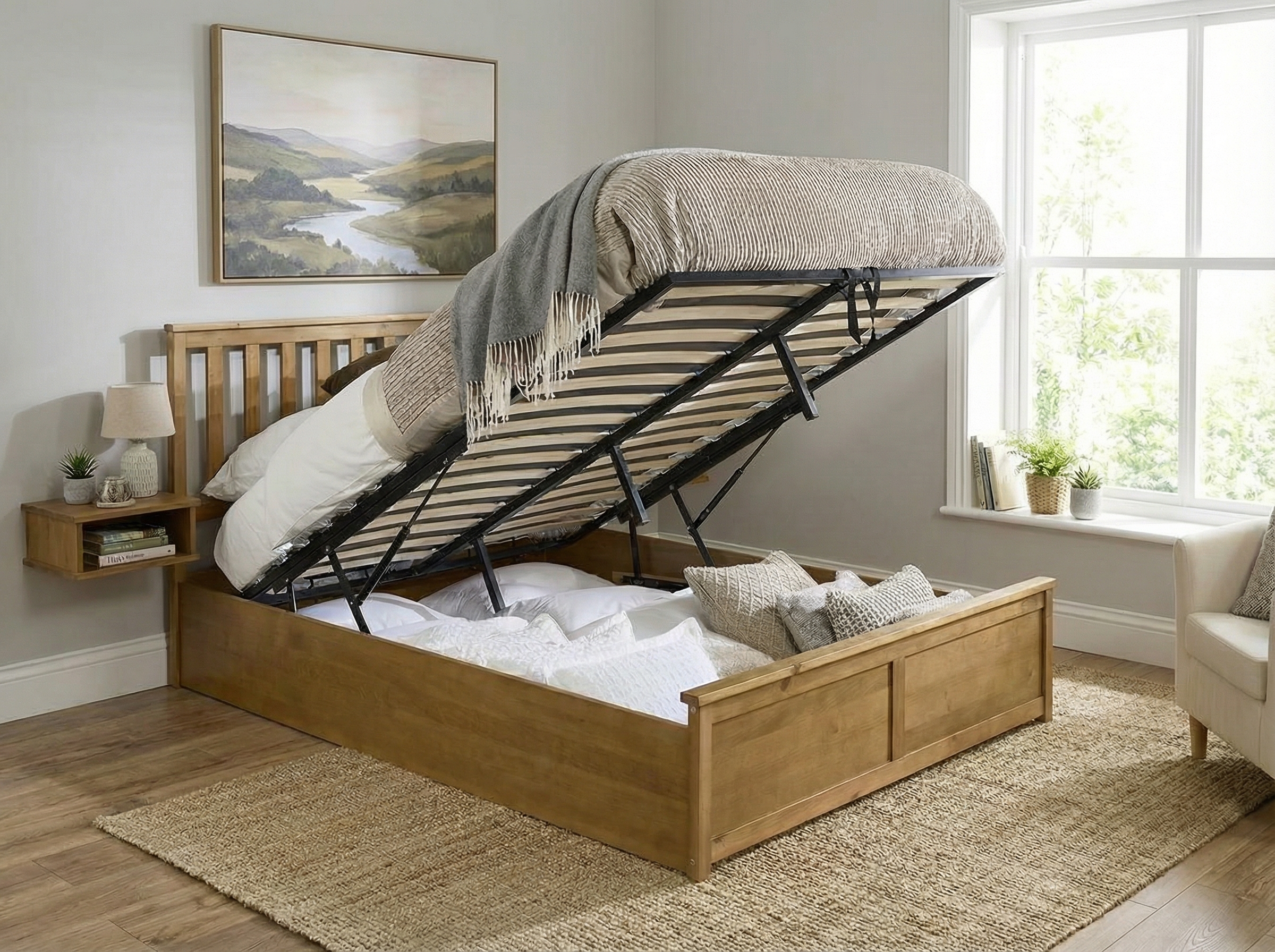
Pictured: Timberland Wooden Ottoman Bed – Natural. Priced £279, available from Bedstar.
Beds with built-in drawers offer a different approach with convenient access without lifting the mattress.
These typically feature between one and four drawers positioned on either side of the bed.
Desks That Serve Multiple Purposes
A desk that doubles as a vanity solves two problems with one piece of furniture. Look for designs with drawers that can handle both office supplies and makeup or grooming products.
Some models include hidden compartments or flip-top lids that reveal storage sections, mirrors, and built-in organisers.
Fold-out desks provide workspace without taking up floor space when not in use. Wall bed systems with integrated desks are particularly impressive – they can change your room from sleeping to working zone in seconds.
Seating Works Double Duty
Storage ottomans and benches prove invaluable for adding extra seating and storage capacity. These pieces often come with hidden storage beneath the seat, making them ideal for stashing away blankets, shoes, or books.
Placing one at the foot of your bed allows for easy access and enhances organisation.
Sofa beds let your bedroom function as comfortable seating during the day and sleeping space at night. Perfect for guest rooms that need to multitask.
Wardrobes and Storage Units
Fitted wardrobes with built-in drawers, compartmentalised sections, and extendable hanging rails make the most of available space. Angled corner wardrobes prove essential for smaller rooms, maximising those awkward corners that often go to waste.
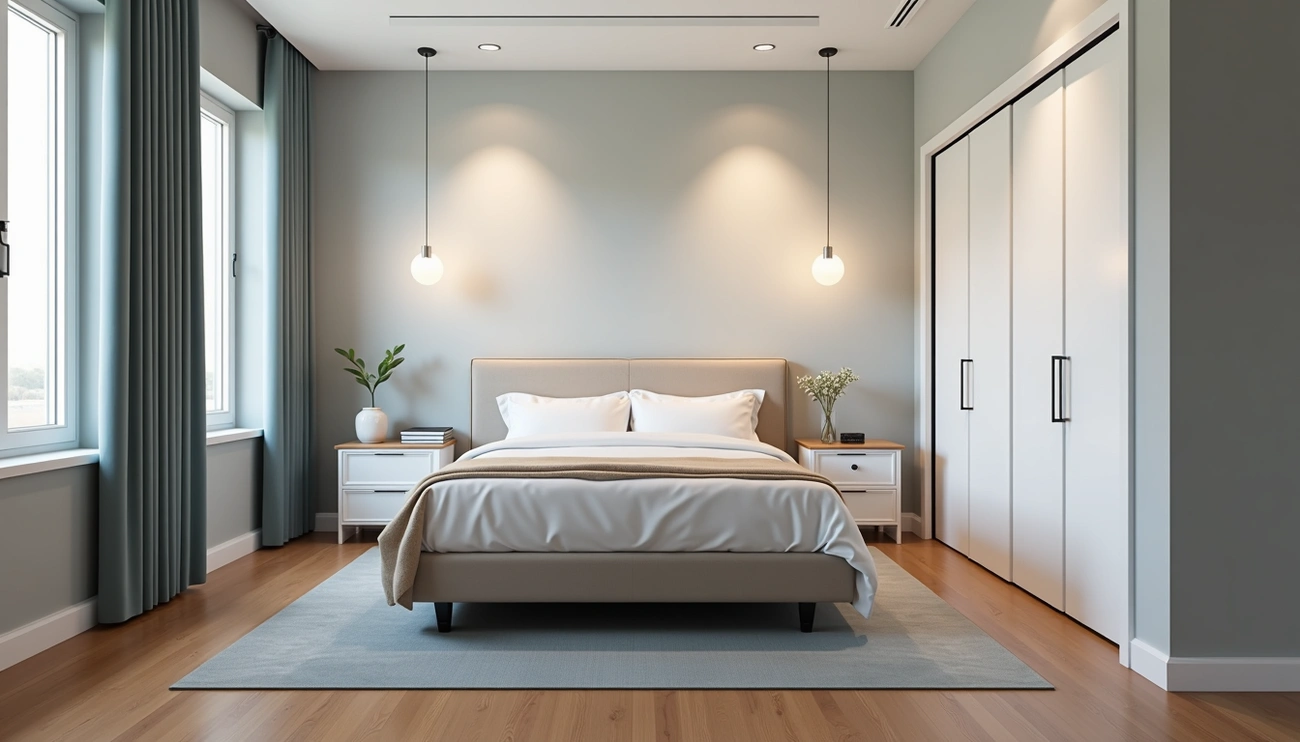
Image source: Bedstar
Smart shoe storage keeps your wardrobe floor clear whilst organising your footwear collection. Built-in cosmetic units, trouser rails, and tilt-out baskets add functionality without consuming extra floor space.
Clever Furniture for Small Bedrooms
Murphy beds fold up against walls or inside wardrobes, disappearing completely when not in use. These wall beds feature advanced mechanisms with air spring systems that adjust automatically for the weight of the bed frame and mattress, ensuring effortless opening and closing.
When closed, your bedroom can become a productive workspace, yoga studio, or creative area. Some systems combine beds with desks that fold away simultaneously, maximising flexibility for the ultimate space-saving solution.
Design Elements That Balance Style and Practicality
Getting the look right whilst keeping everything practical isn’t as tricky as you might think. The secret lies in smart storage, clever lighting, and colour choices that work beautifully together.
Smart Storage Solutions for Clutter Control
Think vertical when floor space is precious. Tall bookshelves, floating shelves, and wall-mounted cabinets keep your essentials within reach without crowding your room.
Organisational accessories make all the difference. Drawer dividers, storage baskets, and wardrobe organisers transform chaotic spaces into perfectly arranged zones. Everything has its place, and you’ll never waste time hunting for that missing item again.
Takeaway Tip: mirrored wardrobes work double duty, creating the illusion of more space whilst bouncing light around to make your room feel bigger and brighter.
Lighting Strategies for Different Activities
Why settle for one light when you can layer multiple sources? Your multi-functional bedroom needs different lighting for different moods and activities.
Ambient lighting sets your room’s overall tone through ceiling fixtures with warm white bulbs (2700K-3000K). Task lighting focuses on specific activities like reading or working, requiring brighter illumination without harsh glare.
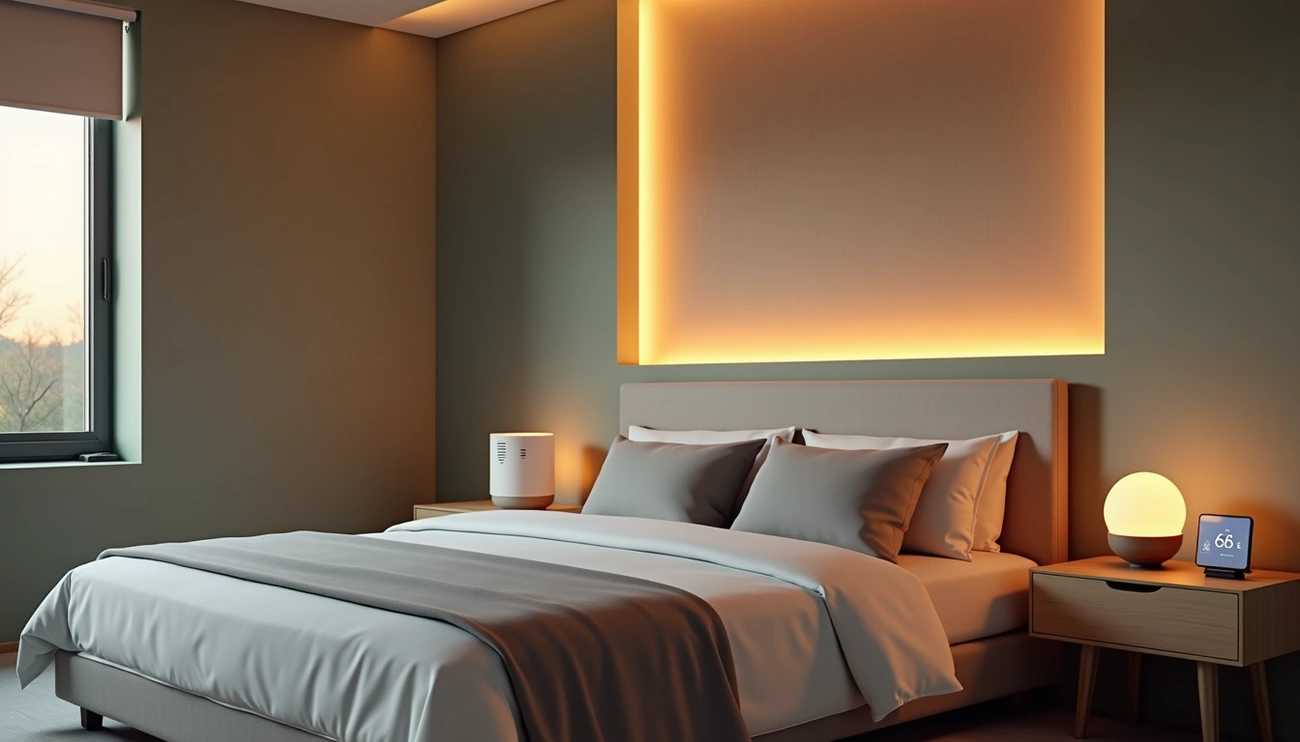
Bedrooms need 10-20 lumens per square foot. Accent lighting adds that final touch, highlighting features and creating depth.
Position floor lamps in relaxation spaces, whilst bedside lights with adjustable arms give you flexibility for reading or general use.
Using Colour and Texture to Define Zones
Colour zoning creates visual interest without building actual walls. Match your colour choices with each zone’s purpose – moody colours work brilliantly for evening relaxation areas, whilst lighter tones energise workspaces.
Don’t go overboard with too many zones though, as this can overwhelm your space. Instead, layer similar colours in varying textures to establish depth whilst maintaining harmony throughout your room.
Maintaining Visual Cohesion Across Functions
Coordinate your furniture finishes and styles to create unity. Matching materials between wardrobes and other pieces produces a streamlined look that feels intentional rather than accidental.
Keep a cohesive colour palette across your textiles, furniture, and walls. Mix complementary textures like smooth fabrics and natural wood grains to add interest without disrupting the visual flow you’ve worked so hard to create.
Conclusion
Your multi-functional bedroom project doesn’t need to feel overwhelming. With smart zoning, clever furniture choices, and the right design approach, you can create a space that works as hard as you do whilst looking absolutely brilliant.
The key is starting with your priorities, then choosing pieces that earn their keep by serving multiple purposes. Done right, your bedroom will handle everything from peaceful sleep to productive work sessions without missing a beat.
So grab your measuring tape, start planning your zones, and get ready to love every square inch of your new multi-functional space. Your perfectly balanced bedroom is closer than you think!
FAQs
Q1. What exactly is a multi-functional bedroom?
A multi-functional bedroom is a space that serves multiple purposes beyond just sleeping. It combines different functions such as working, relaxing, and socialising within a single room.
The design focuses on flexibility and adaptability, allowing you to use the bedroom in various ways depending on your needs throughout the day.
Q2. How can I create separate zones in my bedroom without building walls?
You can create distinct zones using folding screens, area rugs, furniture placement, and curtains. Position furniture like sofas or chairs to naturally divide spaces, use rugs to anchor different areas, and consider built-in wardrobes as architectural dividers. These methods section off areas whilst maintaining light and floor space.
Q3. What are the best storage bed options for maximising space?
Ottoman beds and beds with built-in drawers are excellent choices. Ottoman beds feature hydraulic mechanisms that lift the mattress to reveal a large storage compartment beneath, offering significantly more space than drawer alternatives.
Beds with drawers provide convenient access to storage without lifting the mattress, typically featuring between one and four drawers on either side.
Q4. How much space should I leave around furniture for comfortable movement?
Maintain at least 60cm from doorways to furniture, 45-60cm between seating pieces, and 90cm around tables for walking space.
Leave a minimum of 60cm on either side of beds for comfortable access and allow 90cm in front of wardrobes with hinged doors to permit someone to walk behind you whilst the door is open.
Q5. What lighting should I use for different bedroom activities?
Layer three types of lighting: ambient lighting from ceiling fixtures with warm white bulbs (2700K-3000K) for overall illumination, task lighting for specific activities like reading or working requiring 10-20 lumens per square foot, and accent lighting to highlight features.
Use adjustable bedside lamps for reading and floor lamps for relaxation areas.

fashion-mommy
Welcome to the world of fashion-mommy, a world of fashion, lifestyle, theatre and fun. Enjoy the ride.