Two Oval Rings, Two Very Different Looks
One green ring looks neat and quite spare. The other has a glamorous sweep of sparkle around it. Both descriptions say “oval”, yet they barely seem to belong on the same shortlist. If you keep going back to both, the shape of the centre stone may be only part of what you like.
The setting can give that oval a much bigger presence, or leave its coloured edge almost uninterrupted. Before deciding that you need a larger gemstone, look at where the colour ends and the rest of the ring begins.
Find the edge of the colour
A halo is a ring of smaller stones around the centre. GIA’s coloured gemstone guide describes how it adds sparkle and contrast around a coloured gem. Look closely at a green centre with a diamond halo and you can follow two outlines: the emerald itself, then the outer edge of the diamonds.
In Lily Arkwright’s collection, compare oval gemstone proportions in the platinum Lulu and Diana. Both offer a 7 × 5 mm lab-grown emerald centre. Lulu has four claws and a plain 1.65 mm band; Diana adds a lab-grown diamond halo and a broader, plain 2.50 mm band. Choose that shared centre size and Diana’s halo and wider band both contribute to its more substantial look.
That distinction can explain an apparently contradictory preference: you like a generous-looking ring, but don’t want the coloured centre to dominate. A halo gives the colour a frame. The solitaire leaves the oval more exposed, with skin visible around it instead of another row of stones.
Ask for the whole width
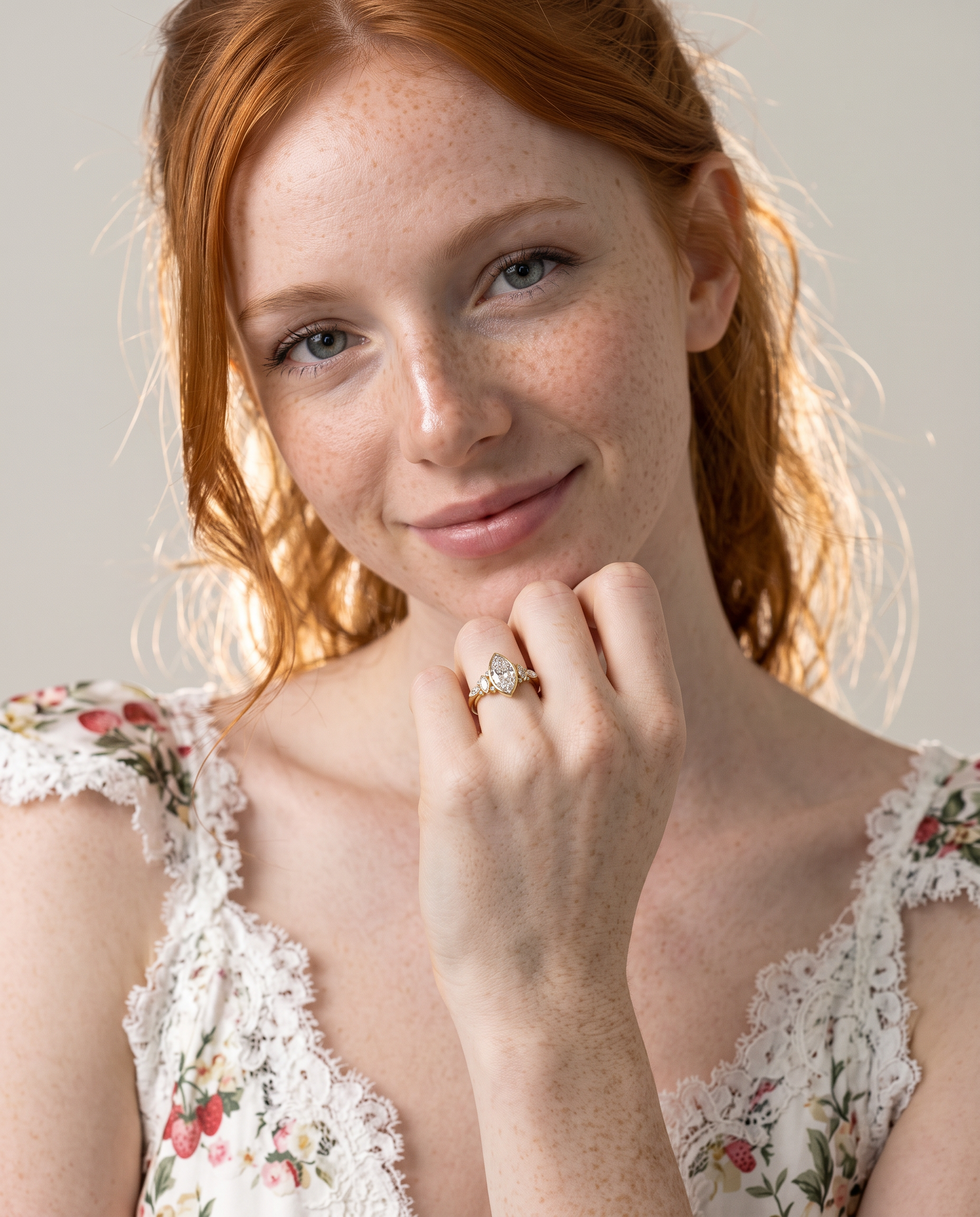
A 7 × 5 mm gemstone measures 7 mm along its length and 5 mm across its width. Those figures don’t tell you the complete ring’s outline once claws, metal and any surrounding stones have been added. Ask for the finished setting’s length and width too. It is especially useful when you are judging how much room the ring will take up across your finger.
Fashion Mommy’s online dress-shopping guide suggests measuring a dress you already love as a benchmark. Try that with a ring you enjoy wearing: measure the widest point of its setting as seen from above, or ask a jeweller to measure it. Compare that number with the new ring’s overall width. You’ll have something firmer than “quite big” to go on.
Look at the halo’s shape separately. Does it follow the oval closely, or spread out into a softer, fuller surround? When you like the outline in a photograph, work out which of those two edges you are following. Replacing a halo with a plain setting could remove the very shape that caught your eye.
The stone’s own proportions still matter. A long, narrow oval and a fuller one can look quite different before either is set. Compare length and width together rather than choosing on length alone. You don’t need to find a supposedly perfect ratio; you need to recognise the outline you keep saving.
The band changes the balance
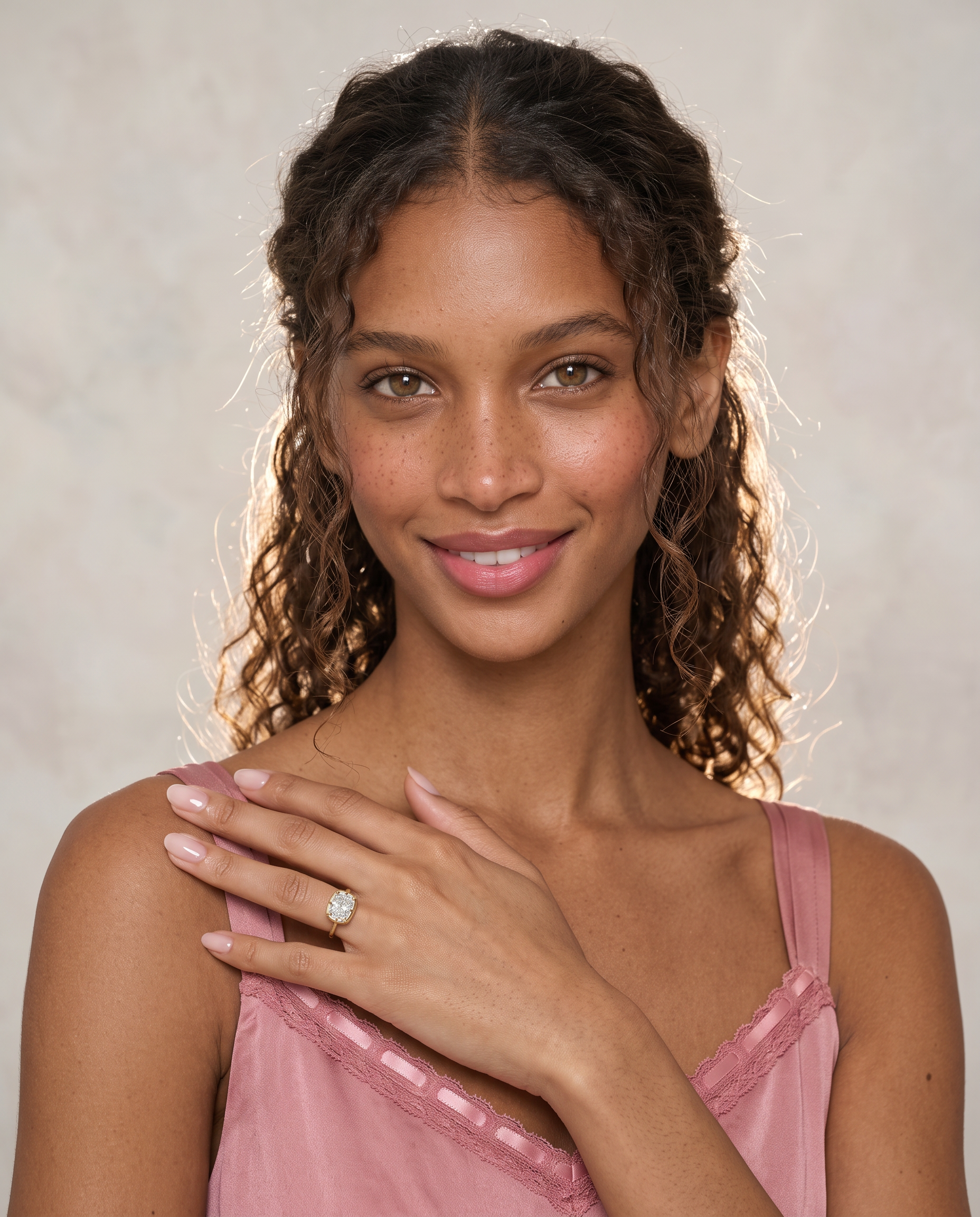
When trying rings, notice the band as your fingers relax together. Does it give the top of the ring the substantial base you enjoy, or would you prefer the coloured oval to sit above a finer line of metal? Try moving your fingers as well. A band you like looking at still needs to feel comfortable.
Keep your usual bracelet or watch on for this part. A slim chain beside a fine band creates a different balance from a substantial watch beside a broader one. You might love the combination you already have. There is no need to assemble a new set of accessories around one ring.
Check what the photograph is showing
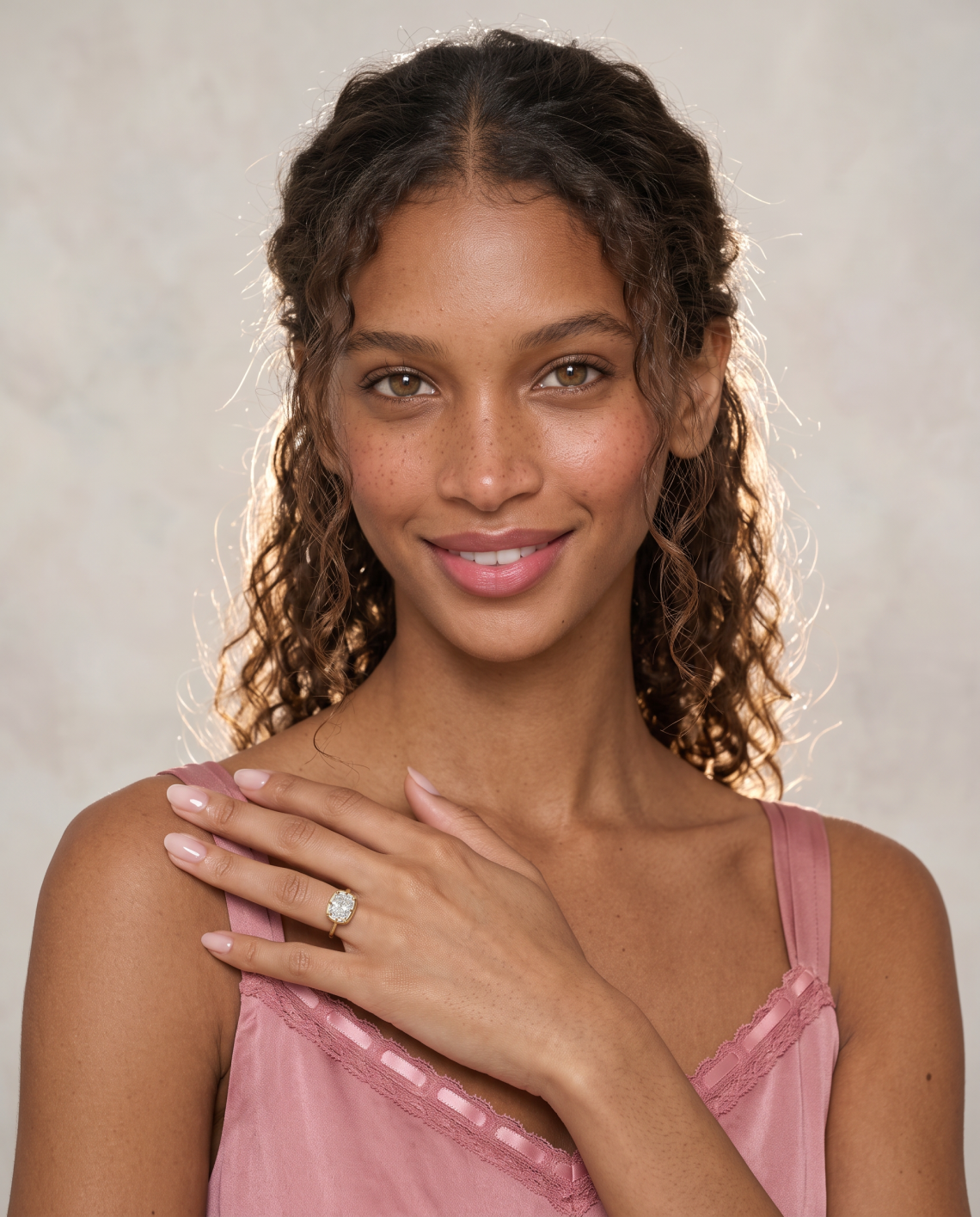
An enlarged product picture is good for seeing claws and individual halo stones. It is less helpful for judging scale. Diana’s platinum emerald listing labels its model photograph and video as showing the 7 × 5 mm centre. Ask which size Lulu’s pictures show before comparing them, or request views of both designs with that centre size.
Once you can see what drew you in, say it plainly. “I like the green oval, but it’s the bright border around it that I keep noticing” gives a jeweller something specific to work with. And if the plain ring is the one you return to, you haven’t talked yourself out of glamour. You’ve found the bit you want to wear.

fashion-mommy
Welcome to the world of fashion-mommy, a world of fashion, lifestyle, theatre and fun. Enjoy the ride.