How To Make Outdoor Family Time More Appealing Than Screen Time
Tech companies engineer screens to be addictive. They offer endless loops of instant gratification with zero physical effort. Competing with a curated digital world feels like a losing battle for parents armed with nothing but a local park and a few good intentions. Four hours. That is the average time a child spends staring at a glowing rectangle every single day. Shocking? Maybe not. Still, kids crave real-world adventure. They just need the right environment.
The trick is not to ban screens completely. Total prohibition usually backfires. It turns a simple tablet into a forbidden artifact of immense power. Instead, the physical environment has to level up. It needs to offer something a digital avatar simply cannot provide. Tactile feedback. Unpredictable outcomes. True freedom.
Build a Seamless Transition Zone
Getting out the front door is often the hardest part of the process. And if shoes are missing, jackets are buried under mail, and the yard looks like a barren wasteland, a child will choose the couch every single time. This is where thoughtful home design makes a massive difference in daily habits.
Planning a simple deck construction project creates a vital physical bridge between the living room and the lawn. A well-designed patio acts as an outdoor mudroom and a safe launchpad. It blurs the line between inside and outside.
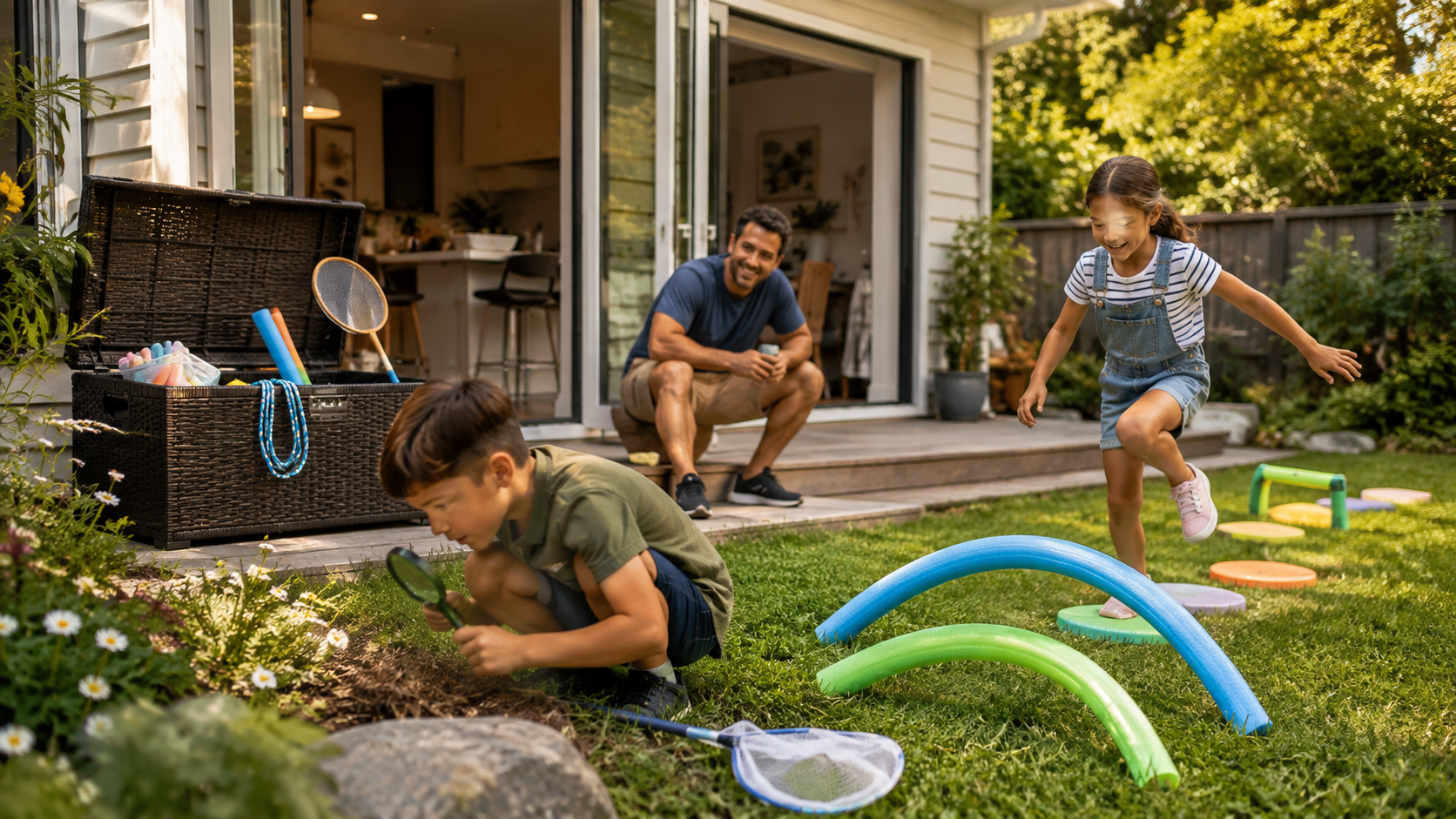
Also, keep a weatherproof storage bench right by the door. Fill it with sidewalk chalk, jump ropes, bubble wands, and bug catchers. A recent neighbourhood survey revealed a 22% increase in spontaneous outdoor play just by moving toy storage from the garage directly to the back patio. When kids can access gear instantly, play happens naturally. No hunting for equipment. No frustration. Just open the door and run.
Gamify the Backyard
Kids love video games because they offer clear objectives, progress tracking, and immediate rewards. You can easily replicate this dynamic outside. Give them a mission.
Create a highly specific scavenger hunt. Don’t just ask them to find a leaf. Ask them to find a leaf shaped like a dinosaur footprint, a rock with a stripe of quartz, and exactly three red berries. Buy a cheap magnifying glass and a sturdy clipboard. Suddenly, a boring patch of grass becomes an active crime scene waiting for a detective.
Take it a step further with geocaching. This real-world treasure hunting requires a smartphone, which brilliantly bridges the gap between technology and nature. They get the satisfaction of looking at a screen, but their legs do all the heavy lifting to find the hidden cache in the woods. Win-win.
You can also use pool noodles, old tires, and wooden planks to design a backyard ninja warrior course. Time them with a stopwatch. Kids will run the same loop 20 times just to shave three seconds off their personal best.
Upgrade the Equipment
Sometimes, the classics need a modern twist. A rusty tricycle might not hold the attention of a seven-year-old raised on high-definition racing games. Introduce tools that offer a genuine thrill.
Speed is a massive motivator. Feeling the wind hit your face while navigating a sharp turn provides a sensory rush no tablet can replicate. Providing equipment that requires actual skill changes the equation from passive viewing to active participation.
Consider investing in an electric car for kids if the neighbourhood layout allows for safe driving. Controlling a motorized vehicle gives a child a profound sense of independence. They have to navigate real-world obstacles, judge physical distances, and make split-second steering decisions. It is a highly engaging activity that naturally keeps them outside for hours until the battery finally dies.
Cultivate Curiosity
Children are natural scientists. They want to poke bugs, mix mud, and see what happens when they drop a heavy rock into a deep puddle. This innate curiosity provides the perfect engine for outdoor learning.
Take the mess outside. Set up a simple chemistry station on the grass using baking soda, vinegar, and a few drops of food colouring. Build a miniature volcano. Explode things safely.
You can also plant a fast-growing vegetable garden. Radishes and snap peas sprout incredibly fast. Let the kids track the daily progress with a measuring tape and a notebook. When children connect physical action with a visible, edible result, their brains light up in ways a YouTube tutorial could never achieve.
Let Them Lead the Expedition
Adults ruin outdoor time by micromanaging it. Constant correction turns playtime into a chore. “Don’t step there, you’ll get muddy.” “Stop touching that dirty stick.” Sound familiar?
Step back. Let them dictate the pace of the afternoon walk. If they want to spend 20 minutes inspecting a single line of ants carrying breadcrumbs, let them. If they want to build a wobbly fort out of fallen branches and old tarps, hand them some twine and sit on a stump. True engagement happens when a child feels completely in control of their environment. Give them the space to make mistakes, get incredibly dirty, and discover the neighbourhood on their own terms.

fashion-mommy
Welcome to the world of fashion-mommy, a world of fashion, lifestyle, theatre and fun. Enjoy the ride.